





Insynergy

INSIGHTS

Insights

Essays distributed globally via insynergy.io.

Latest

Swipe / Shift+Wheel

The Last Signature

The Last Signature

AI accelerates drafting reports and papers, but human review and approval cannot scale at the same pace. The real bottleneck is judgment—and most organizations have not designed for it. Generative AI has made production faster. But the human judgment required at the end of every workflow—the signature that accepts accountability—has not scaled. The result is a structural bottleneck that better models and stricter guidelines cannot solve.

2026-02-01

Why "High Agency" Is Becoming the Defining Human Capability in the Age of AI

Why "High Agency" Is Becoming the Defining Human Capability in the Age of AI

As AI makes execution cheap, judgment becomes scarce. This essay argues that “High Agency” is not a mindset but a design problem—one that. organizations must solve deliberately. Introducing the concept of hollow judgment, it examines how AI systems can preserve the appearance of human oversight while quietly eroding real responsibility. High Agency, the article contends, must be designed across individuals, organizations, and AI systems through clear decision boundaries and accountability.

2026-01-31

When Agents Act Alone

When Agents Act Alone

An abstract architectural diagram of a system with execution layers clearly visible, but the judgment layer intentionally left empty. Clean lines, precise geometry, with a noticeable missing boundary between execution and responsibility. No people, no interfaces, no machines depicted. Conceptual, structural, and philosophical tone.

2026-01-31

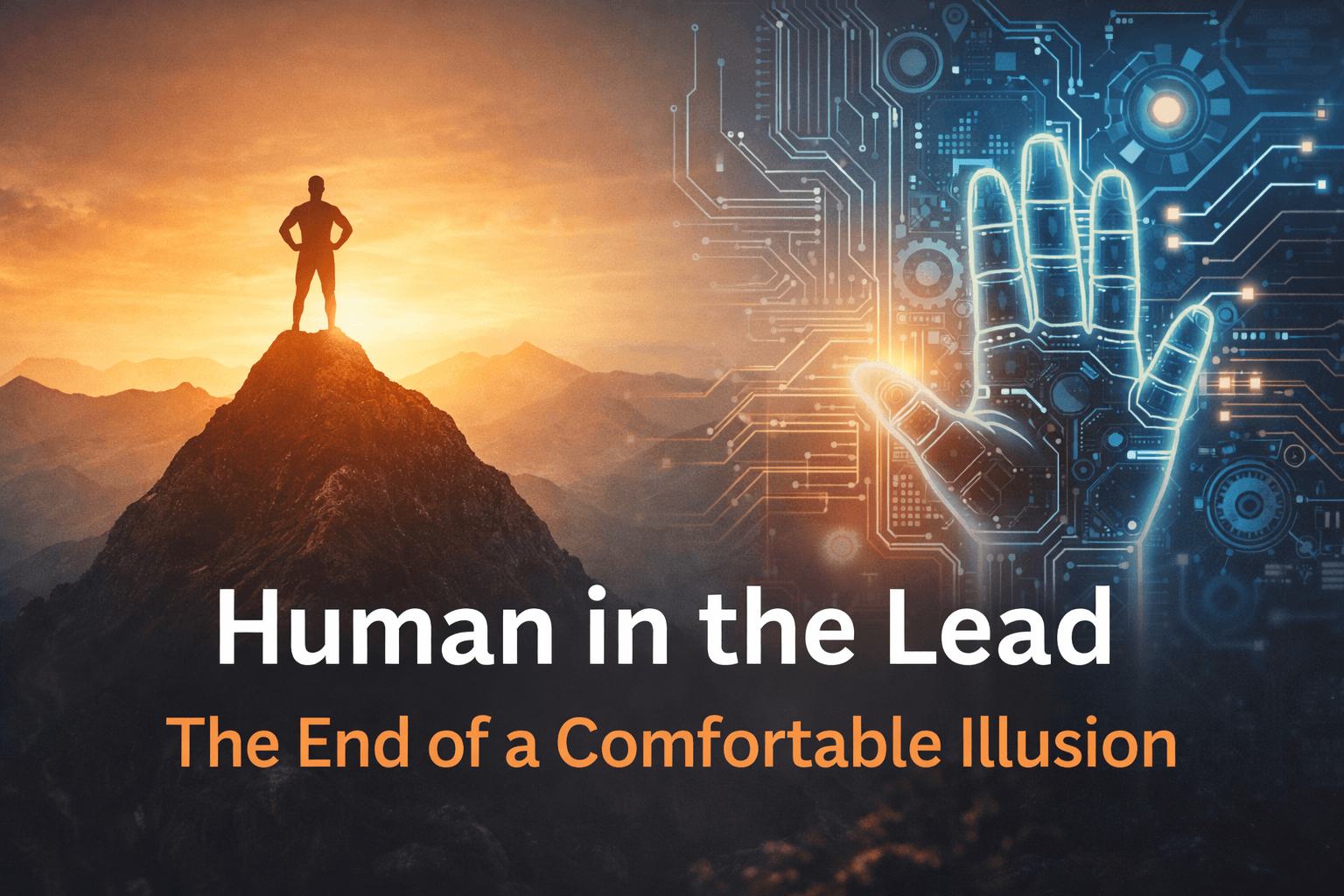
Human in the Lead: The End of a Comfortable Illusion

Human in the Lead: The End of a Comfortable Illusion

“Human in the loop” once reassured organizations that AI remained under control. But as AI systems scale decisions across hiring, finance, and operations, responsibility has quietly dissolved. Drawing on decisive remarks by Accenture CEO Julie Sweet at Davos 2026, this essay argues that the shift toward “human in the lead” is not a slogan change, but a structural redefinition of judgment, accountability, and leadership in the AI era.

2026-01-30

The Subject Who Signs

The Subject Who Signs

AI can generate corporate documents, analyses, and recommendations at unprecedented speed. But responsibility does not migrate with generation. This essay examines why accountability remains irreducibly human, how decision boundaries function as institutional facts, and why organizations must deliberately design responsibility— not merely govern models— in an age of machine-generated decisions.

2026-01-30

Why Finance Won’t Let AI Decide: The Structural Logic of Responsibility Retention

Why Finance Won’t Let AI Decide: The Structural Logic of Responsibility Retention

Advanced financial institutions are not resisting AI out of conservatism, but out of structural wisdom. This essay explains why AI can accelerate analysis and expand option spaces, yet cannot assume responsibility. The central challenge of AI governance is not model accuracy, but the deliberate design of decision architecture that preserves clear boundaries between machine-supported analysis and human-authorized commitment.

2026-01-30

Who Owns Judgment in the Age of AI?

Who Owns Judgment in the Age of AI?

AI governance is often framed as a problem of control, safety, or ethics. This essay argues that the deeper risk is structural: the quiet disappearance of human judgment. As AI systems optimize decisions at scale, responsibility dissolves unless judgment is intentionally designed. The question is no longer what AI can do—but who, if anyone, is still deciding.

2026-01-30

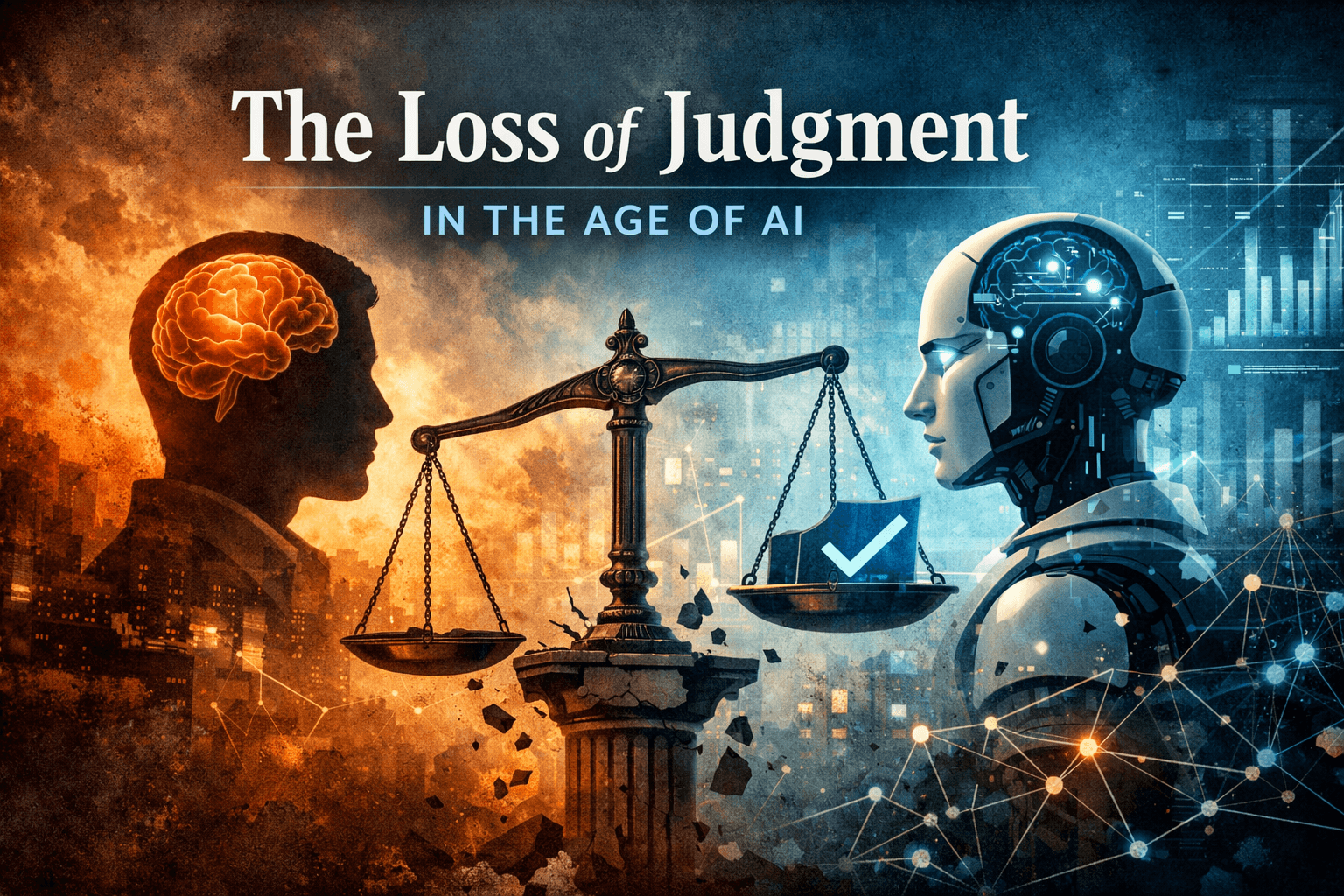
The Real Risk of AI Is Not the Loss of Meaning — It’s the Loss of Judgment

The Real Risk of AI Is Not the Loss of Meaning — It’s the Loss of Judgment

As AI systems become capable of doing almost everything, the dominant anxiety has shifted toward questions of human meaning. This essay argues that the real risk is not the loss of meaning, but the erosion of human judgment and accountability through poorly designed decision structures. The future of AI depends on whether we continue to design systems where humans genuinely decide—and remain responsible for the outcomes.

2026-01-29

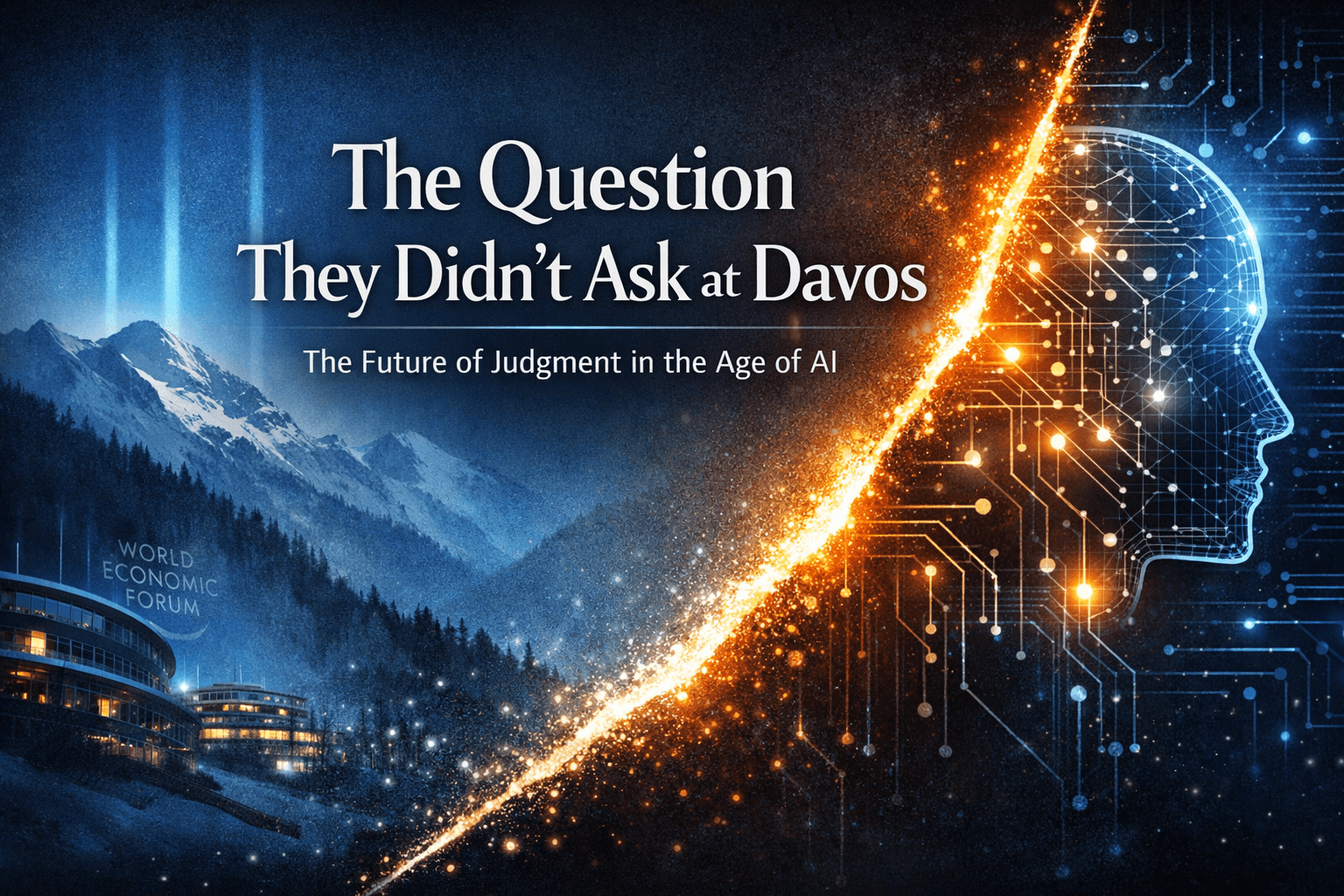
The Question They Didn’t Ask at Davos

The Question They Didn’t Ask at Davos

As the AGI debate accelerates, a deeper question remains unasked: where does human judgment reside when AI surpasses us cognitively? This essay introduces Decision Design as the missing structural layer.

2026-01-28

All

Why "High Agency" Is Becoming the Defining Human Capability in the Age of AI

As AI makes execution cheap, judgment becomes scarce. This essay argues that “High Agency” is not a mindset but a design problem—one that. organizations must solve deliberately. Introducing the concept of hollow judgment, it examines how AI systems can preserve the appearance of human oversight while quietly eroding real responsibility. High Agency, the article contends, must be designed across individuals, organizations, and AI systems through clear decision boundaries and accountability.

Why Finance Won’t Let AI Decide: The Structural Logic of Responsibility Retention

Advanced financial institutions are not resisting AI out of conservatism, but out of structural wisdom. This essay explains why AI can accelerate analysis and expand option spaces, yet cannot assume responsibility. The central challenge of AI governance is not model accuracy, but the deliberate design of decision architecture that preserves clear boundaries between machine-supported analysis and human-authorized commitment.

The Real Risk of AI Is Not the Loss of Meaning — It’s the Loss of Judgment

As AI systems become capable of doing almost everything, the dominant anxiety has shifted toward questions of human meaning. This essay argues that the real risk is not the loss of meaning, but the erosion of human judgment and accountability through poorly designed decision structures. The future of AI depends on whether we continue to design systems where humans genuinely decide—and remain responsible for the outcomes.